


More
Rebates vs. Upfront Discounts: Save More on Your Window and Door Project
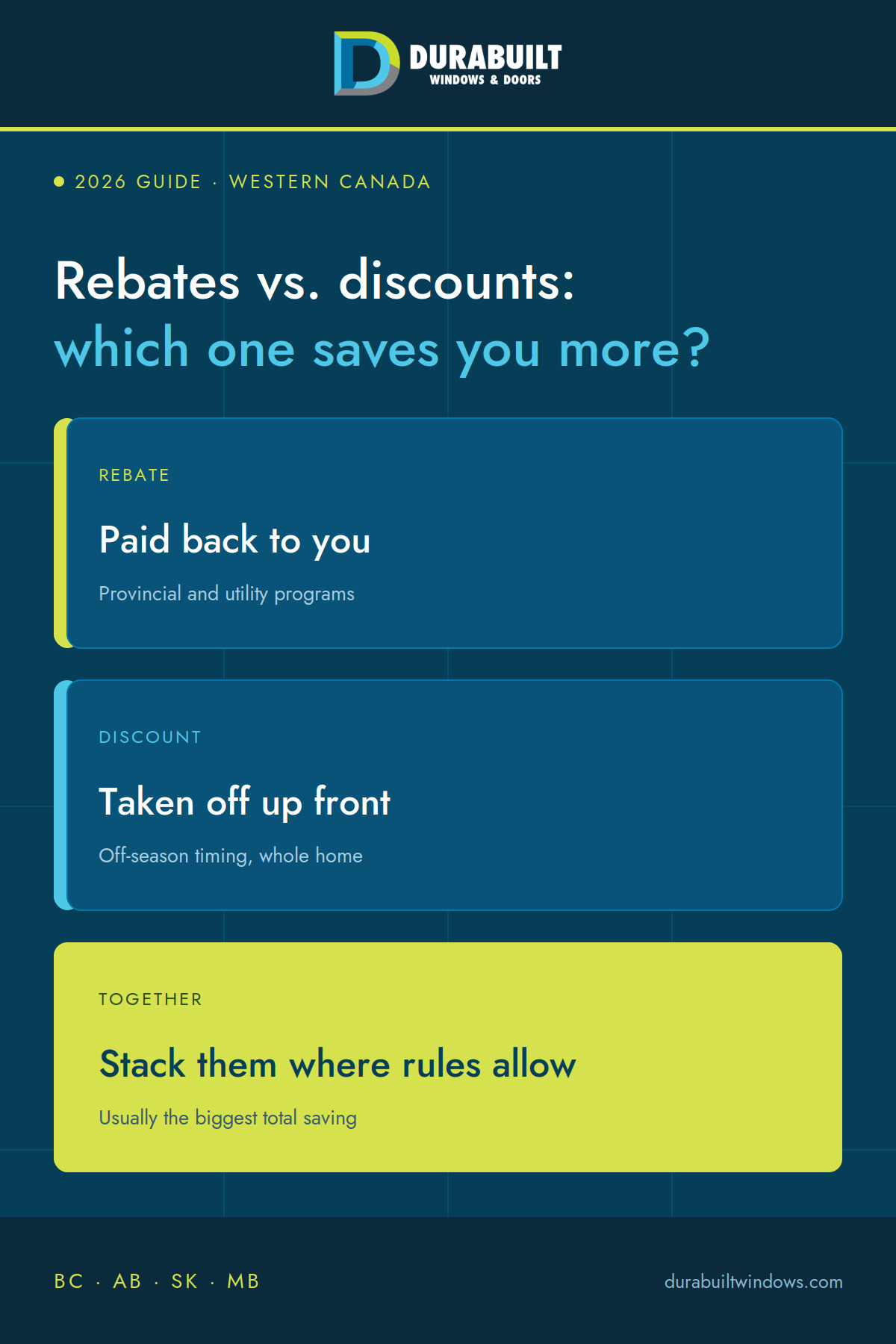
When you're facing a four/five-figure window and door project, every dollar of savings counts — and there are two very different ways to find them. A rebate is money you get back, usually from a government or utility program, after you've installed qualifying products. A discount is money taken off the price up front, typically offered by the company doing the work.
They're not the same, they don't work the same way, and; importantly, you can often use both. Here's how to think about each so you save the most on your project.
A quick note before we start: rebate programs change often, and eligibility rules vary by province, income, and even municipality. Use the official links below to confirm what's available before you plan around it.
How window rebates work in Western Canada
Most Canadian window rebates share the same basic logic: replace old, inefficient windows with high-efficiency ones, and a government or utility gives you money back for the energy you'll save.
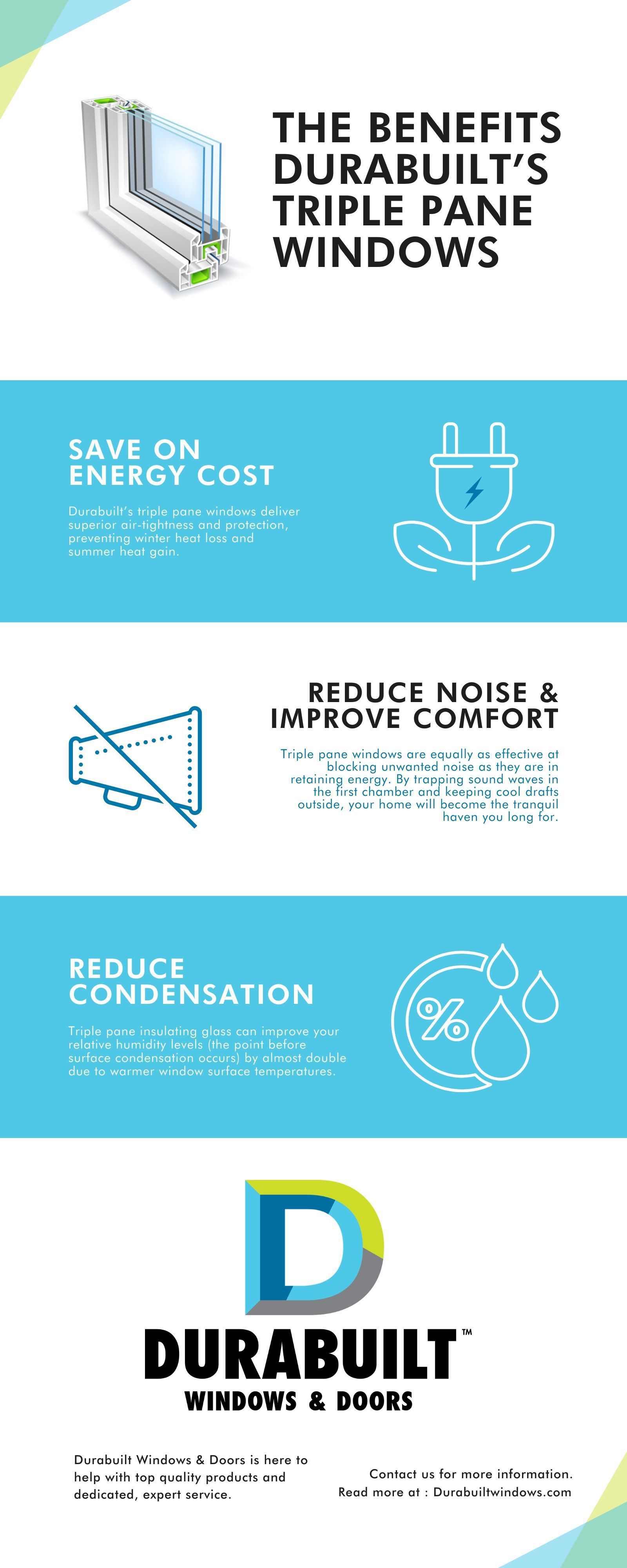
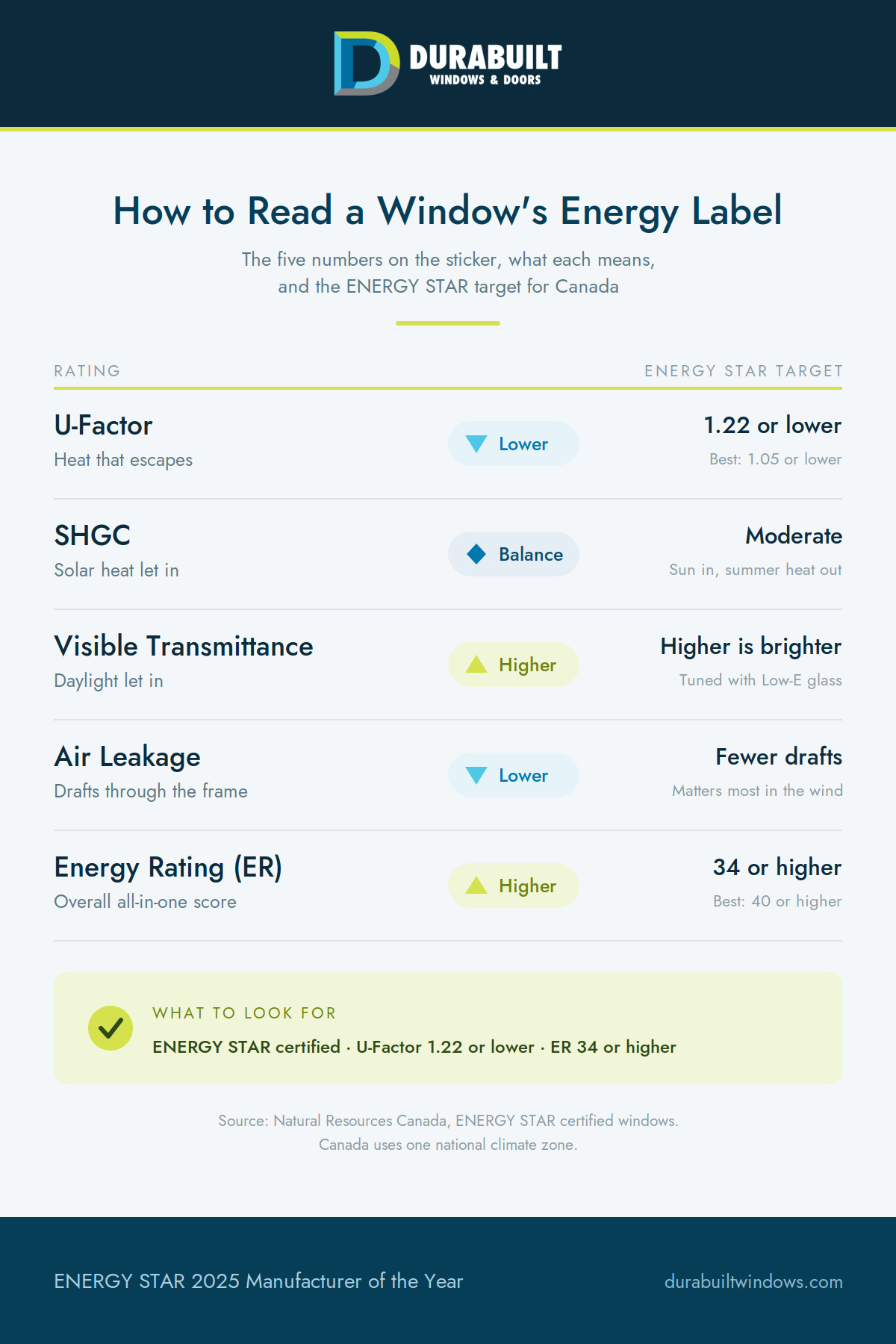
Nearly all of them require the products to be ENERGY STAR certified, typically with a maximum U-Factor of 1.22 W/m²·K. Many require you to record an NRCan reference number (formatted like NR####-######-ES#) for each window — ask your supplier to put it on the invoice. Some programs also require you to apply before you install, or to have an EnerGuide home energy evaluation done. Miss one of those steps and you can forfeit the rebate, so read the rules first.
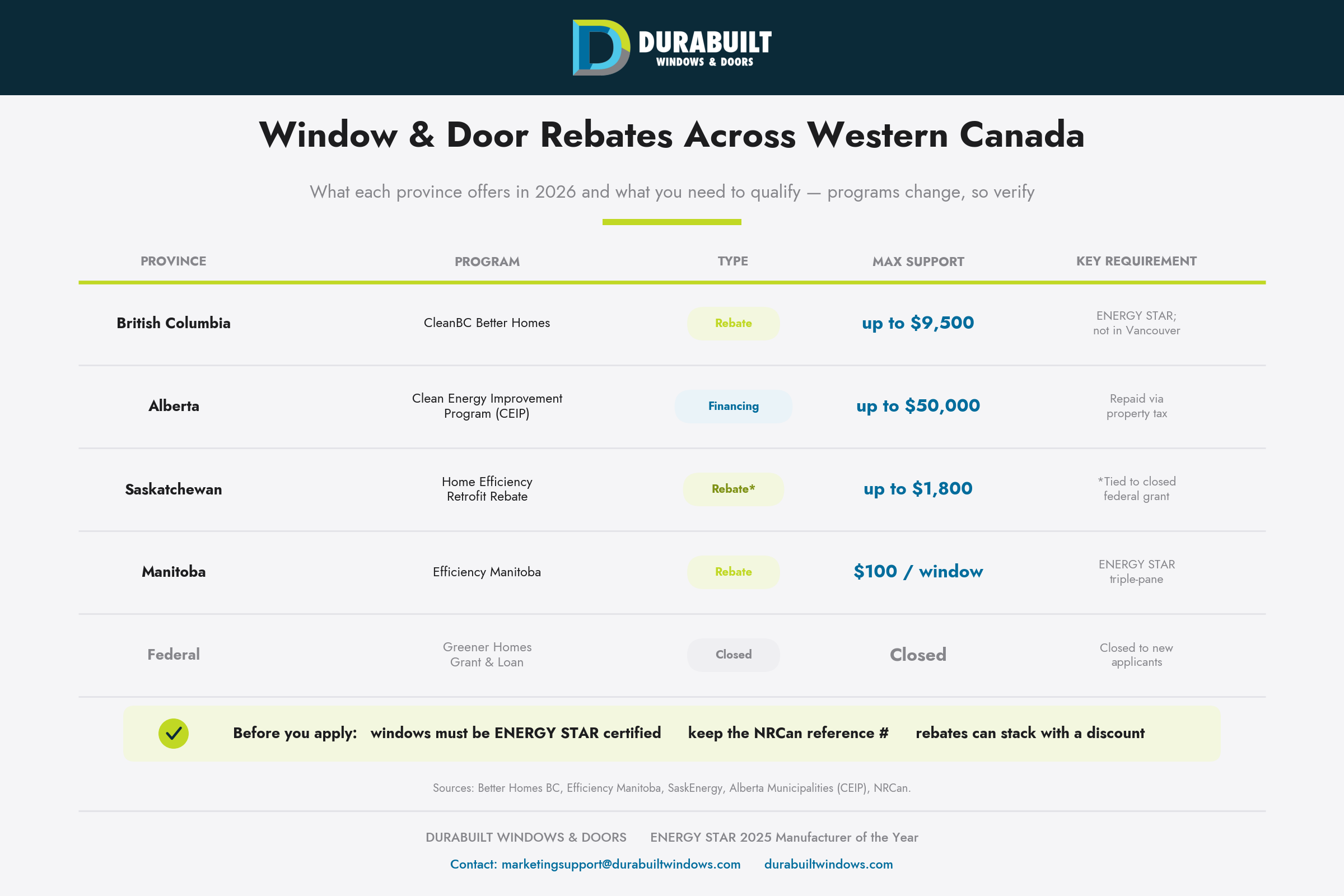
What's available in Western Canada (2026)
Here's the current landscape across the four Western provinces. Amounts and eligibility change — treat these as a starting point and confirm at the source.
British Columbia: The most generous programs
B.C. has the strongest rebate offering in the West. Through the CleanBC Better Homes and Home Renovation Rebate Program, homeowners can receive up to $100 per window or door (up to 20 openings, roughly $2,000 total) for qualifying ENERGY STAR products, as detailed on Better Homes BC. Income-qualified households can do considerably better — up to $950 per opening, to a maximum of $9,500 — and natural-gas-heated homes may also qualify for FortisBC rebates that can stack on top. Two things to note: most CleanBC window rebates are not available in the City of Vancouver, and the higher income-qualified amounts depend on household income and home value.
Alberta: More financing rather than rebates
Alberta has no province-wide window rebate. Its main tool is the Clean Energy Improvement Program (CEIP), which lets eligible homeowners finance energy-efficient upgrades — including windows — and repay through their municipal property tax bill, often with no money down. CEIP is administered by Alberta Municipalities, and availability is municipal: Edmonton's program is active (and often near capacity, so apply early), and Calgary's residential program has been reopening in 2026. Alberta also runs SHARP, a program that helps homeowners aged 65+ with home repairs including windows, and some municipalities (such as Banff and St. Albert) offer their own local incentives.
Saskatchewan: A closing rebate and a city loan
Saskatchewan's Home Efficiency Retrofit Rebate (HERR), offered jointly by SaskEnergy and SaskPower, provides up to $1,800 (plus $200 toward energy evaluations) for improvements to the building envelope, including windows and doors. Important caveat: HERR was tied to prior registration under the now-closed federal Canada Greener Homes Grant, with participation deadlines through early 2026 — so if you weren't already enrolled, confirm whether it's still open to you. In Saskatoon, the Home Energy Loan Program (HELP) offers financing of up to $60,000 for efficiency upgrades.
Manitoba: A simple straightforward rebate
Efficiency Manitoba's Windows and Doors Rebate offers $100 for each ENERGY STAR–certified triple-pane window or door you install, up to $2,000, as described on Efficiency Manitoba's site. You apply within 90 days of installation and full payment, and you'll need the NRCan reference number for each product. Manitoba was also the first province to sign onto the federal affordability program (below), and Manitoba Hydro offers low-interest financing for efficiency upgrades.
The federal picture: Mostly closed
Two federal programs that funded windows in recent years have wound down: the Canada Greener Homes Grant closed to new applicants in 2024, and the Canada Greener Homes Loan closed to new applications on October 1, 2025 (existing borrowers continue under their original terms). A newer income-qualified program, the Canada Greener Homes Affordability Program, is rolling out province by province. Because this area is in flux, check Natural Resources Canada for the current federal status before relying on it — and don't plan around the old Greener Homes Grant, which is gone.
The other side: Upfront discounts
Discounts come from the company doing the work, and there are legitimate ways to earn them:
- Off-season timing. Demand for windows drops in late autumn and winter, and many installers offer discounts to keep crews busy. Just confirm your installer is equipped for cold-weather work — reputable ones do it routinely.
- Doing the whole project at once. Replacing all your windows in a single visit spreads the crew's mobilization cost across more openings, lowering the per-window price versus doing a few at a time.
- Buying factory-direct. Purchasing from the manufacturer rather than through a dealer removes a markup layer from the price. If you’re going to buy from a manufacturer, why not select Energy Star’s manufacturer of the year for 2025? That’s Durabuilt Windows and Doors.
One kind of "discount" to be skeptical of: the misleading "70% off" sale, where the price is inflated specifically so it can be dramatically slashed. If a discount only exists because the starting number was never real, it isn't saving you anything.
Rebates vs. discounts: Which saves more?
There's no universal winner — it depends on your province, your income, and the timing of your project. But a few principles help:
- You can often stack them. A CleanBC or Efficiency Manitoba rebate doesn't prevent you from also getting an off-season or whole-home discount. The biggest total savings usually come from combining a rebate, a smart discount, and the right timing.
- Rebates come with conditions; discounts are immediate. A rebate requires ENERGY STAR products, paperwork, and sometimes pre-approval — but it's real money once earned. A discount is simpler and up front, but only as meaningful as the price it's applied to.
- A rebate can quietly upgrade your product. Because rebates require efficient, ENERGY STAR–certified windows, chasing one often nudges you toward a better product than you'd have bought otherwise — which pays off again in lower energy bills.
Don't forget 0% financing, where available, as a third lever: it doesn't reduce the total cost, but it spreads it into manageable payments so you can buy the quality product now and capture the energy savings sooner rather than waiting.
Now You Know
The most effective way to lower the cost of a window and door project isn't to pick a rebate or a discount — it's to understand both, confirm what your province currently offers, and combine them wherever the rules allow. Because the rebate landscape shifts so often, the single most useful habit is to check the official program pages before you plan.
At Durabuilt, our team stays current on the rebate and financing programs across Western Canada and can help you identify what your project may qualify for — and make sure your windows carry the ENERGY STAR certification and NRCan reference numbers those programs require. If you'd like help mapping out the savings on your project, reach out for a consultation.
Sources
- Better Homes BC (CleanBC) — Windows and Doors Replacement Rebate
- Efficiency Manitoba — Windows and Doors Rebate
- SaskEnergy — Home Efficiency Retrofit Rebate (HERR)
- City of Calgary — Clean Energy Improvement Program (CEIP)
- City of Edmonton — Clean Energy Improvement Program (CEIP)
- Natural Resources Canada — ENERGY STAR criteria and federal program information
Blog
Related Topics

.jpg)
.jpg)
.jpg)
.png)

.jpg)
.jpg)
.jpg)









Over 100 locations to serve you
We can't wait to get your project started! Discover a design gallery or dealer near you.
© 2025 Durabuilt


© 2025 Durabuilt